Chile
Our Rating:
Chile: from desert moonscapes to glacial wilderness and cold-water surfs
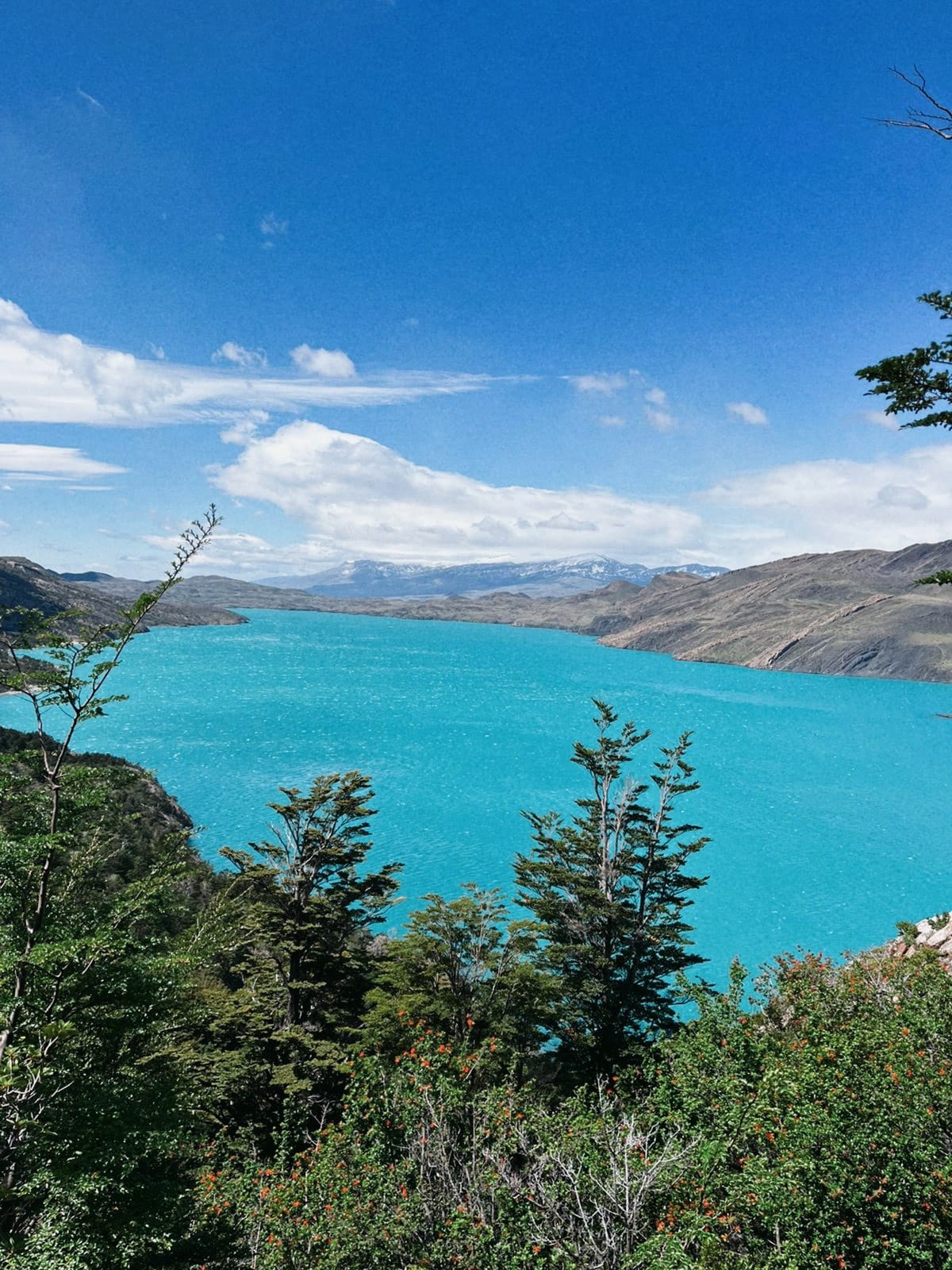
From the bustling streets and mountain backdrop of Santiago to the vast silence of the Atacama Desert, Chile stretches through some of the planet’s most striking contrasts. Along its endless Pacific coastline, surfers chase powerful swells, while in the far south, Patagonia unfolds in dramatic peaks, icy fjords, and endless trails. Chile is a land of extremes—where urban life, surf breaks, deserts, and glaciers exist within a single, breathtaking ribbon of land.
Best time of year to visit
Chile is a year-round destination, where every season offers something special —from summer hikes in Patagonia to winter skiing in the Andes.
- Chile: from desert moonscapes to glacial wilderness and cold-water surfs
- Matanzas: Chile’s coastal playground for adventure lovers
- Pichilemu: laid-back surf town on Chile’s wild coast
- Puertecillo: remote surf haven on Chile’s central coast
- Puerto Natales: small Patagonian base with big adventure energy
- Santiago: culture, food & nightlife in Chile’s Capital
- The W Trek: Patagonia’s classic adventure
- Discover your next Destination
Sea
Matanzas: Chile’s coastal playground for adventure lovers
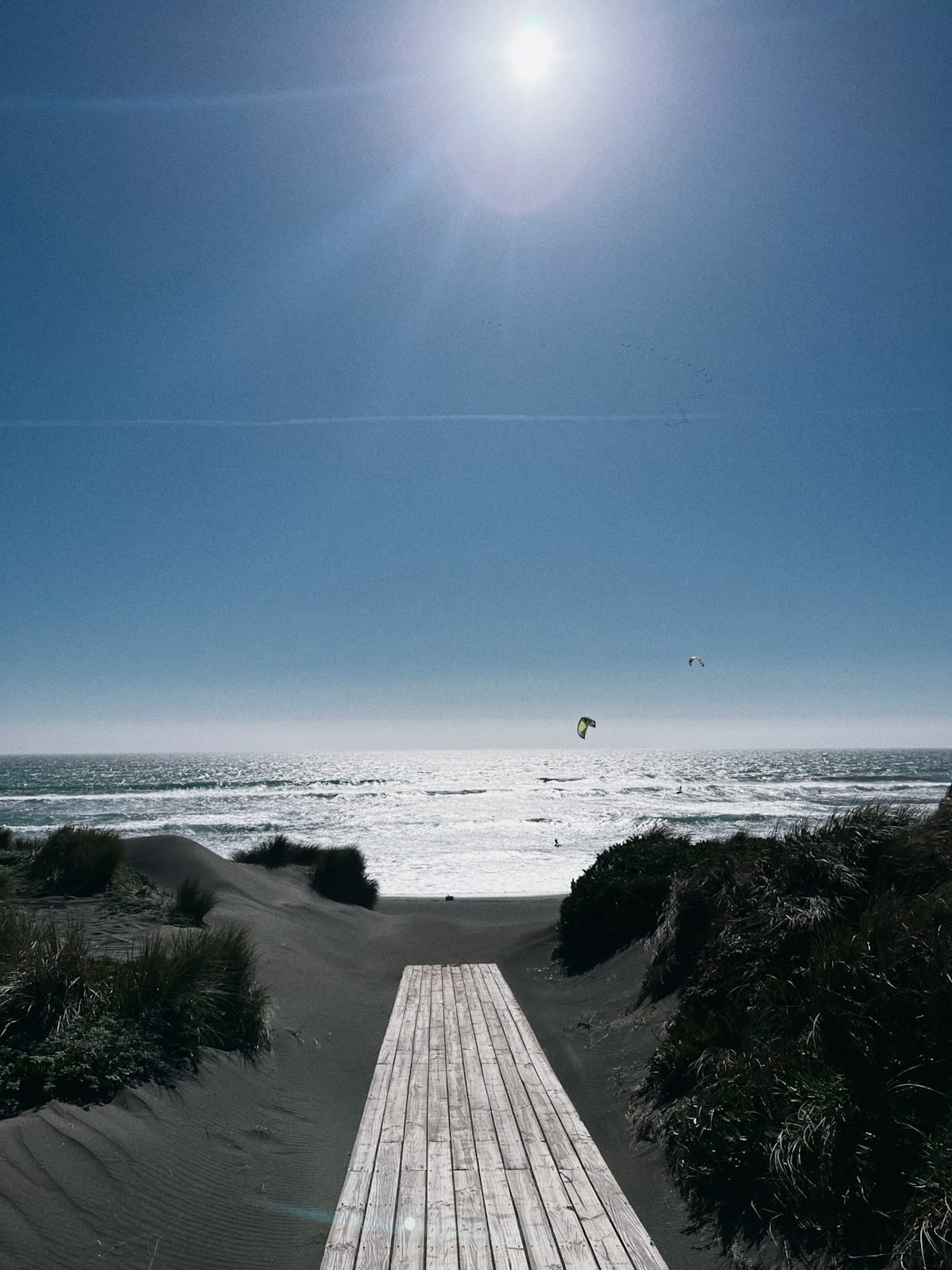
Just a few hours south of Santiago, Matanzas feels like a secret spot tucked between rolling hills and the wild Chilean coast. It’s a small, beautiful village with the kind of raw energy that draws adventurous travelers—surfers chasing the next wave, kitesurfers skimming across the wind, and mountain bikers tackling coastal trails. Despite its size, Matanzas has everything you need for a few unforgettable days by the ocean.
Stay at Alma Lodge
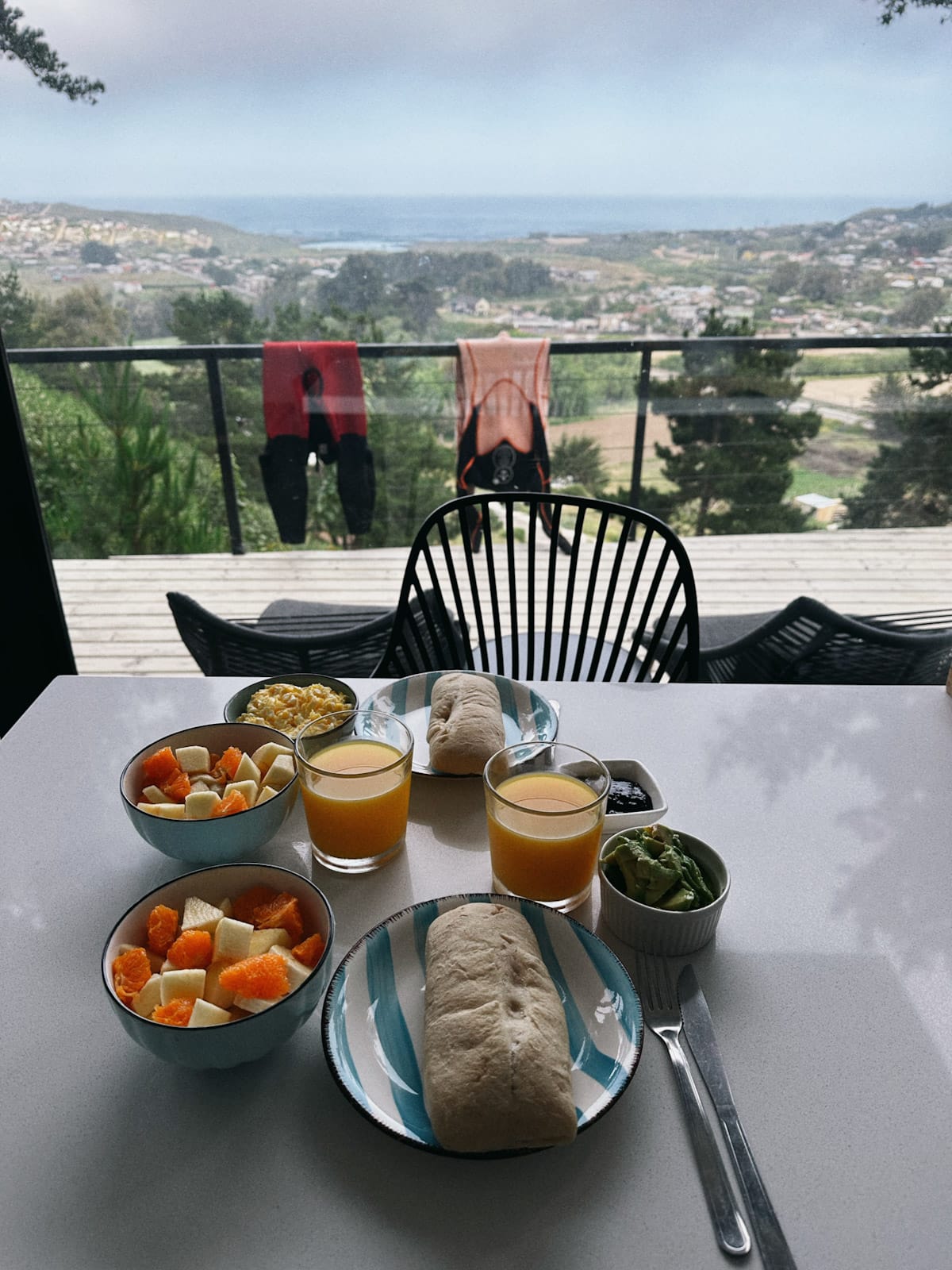
Just five minutes from the sea, Alma Lodge is the perfect place to stay in Matanzas. Perched on a hill overlooking the Pacific, it offers sweeping views of the coastline—and some of the most breathtaking sunsets you’ll see in Chile. The atmosphere is peaceful, the design blends comfort (including private breakfast) with simplicity and after a day of surfing or biking, there’s nothing better than sitting back with a glass of wine as the sky turns pink over the ocean.
Where to eat
La Pizzeria Matanzas – a local favorite for good reason. The pizzas here are outstanding—crispy, wood-fired, and full of flavor. They even offer vegan cheese, so everyone can enjoy a perfect post-surf dinner.
La Meseta – known for its amazing burgers and fries, this is the go-to spot when you’re craving something hearty after a long day of outdoor adventure.
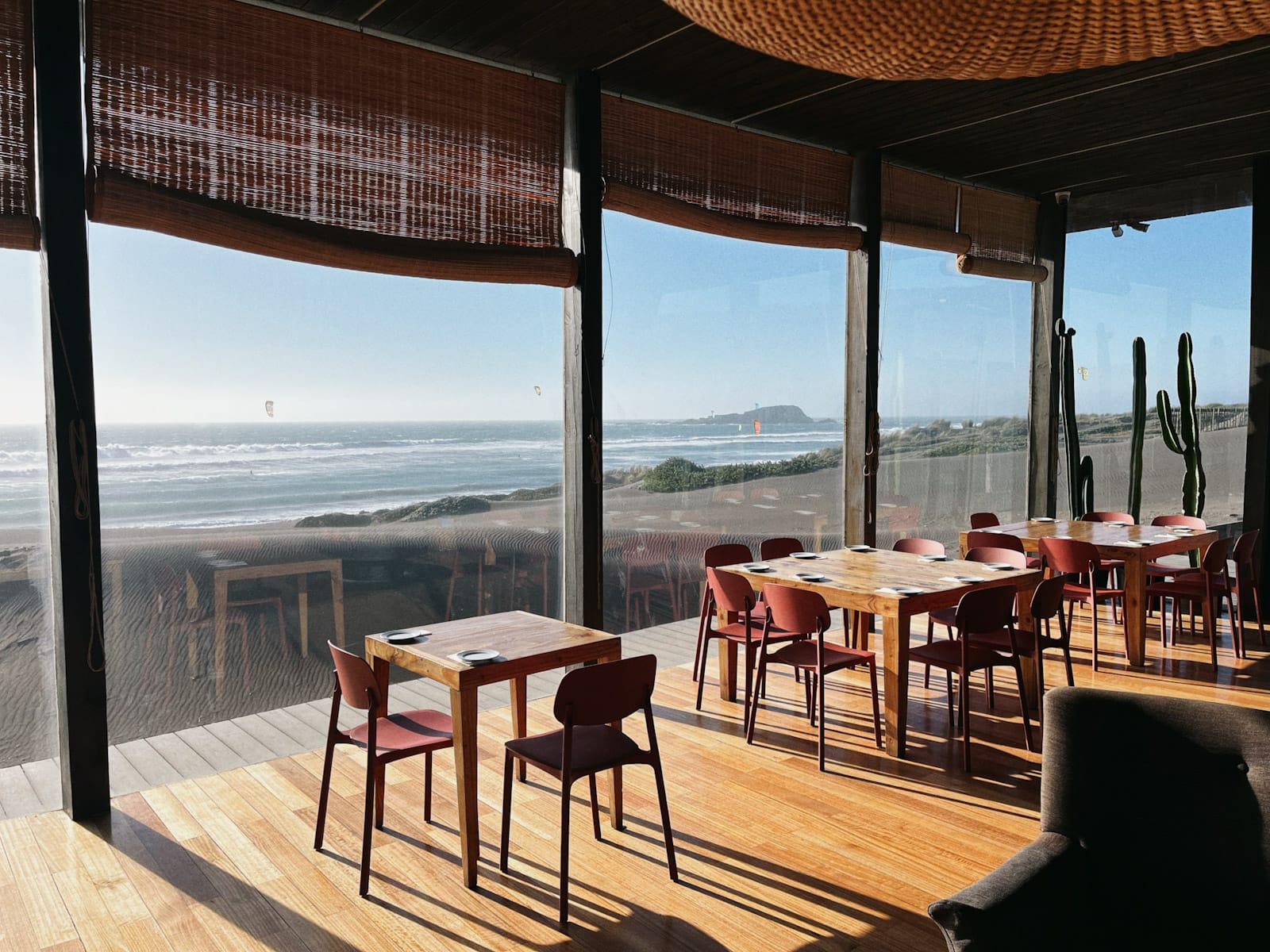
Marola – located in La Vega de Pupuya, just a short drive from Matanzas, Marola offers a more refined dining experience with stunning views over the kitesurfers below. Come for the food, stay for the view—it’s one of the best sunset dinner spots in the area.
Where to drink
Hotel Surazo – even if you’re not staying there, Hotel Surazo is worth a visit for a drink. The terrace overlooks the beach, and you can watch windsurfers and surfers cutting through the waves as you sip a cold beer.
La Lobera – part of the local KiteSurf Club and located right next to Marola in La Vega de Pupuya, La Lobera is another fantastic spot for a drink with a view. It’s casual and friendly, with front-row seats to the kitesurfers flying across the water.
What to do
Surfing – the surf in Matanzas isn’t the easiest, with powerful waves and sometimes windy conditions, but it’s a great challenge for intermediate to advanced surfers. Beginners can still enjoy the whitewash close to shore, while more experienced surfers will love the reef break further out.
Kitesurfing – the strong coastal winds create ideal conditions for kitesurfing, especially in La Vega de Pupuya.
Windsurfing – on days with fewer waves, swap the board for a sail and enjoy smooth rides along the shore (or enjoy watching the local wave windsurfers on big-wave days.).
Mountain biking at La Meseta – a network of MTB trails with challenging climbs, fast descents, and panoramic ocean views.
Sea
Pichilemu: laid-back surf town on Chile’s wild coast
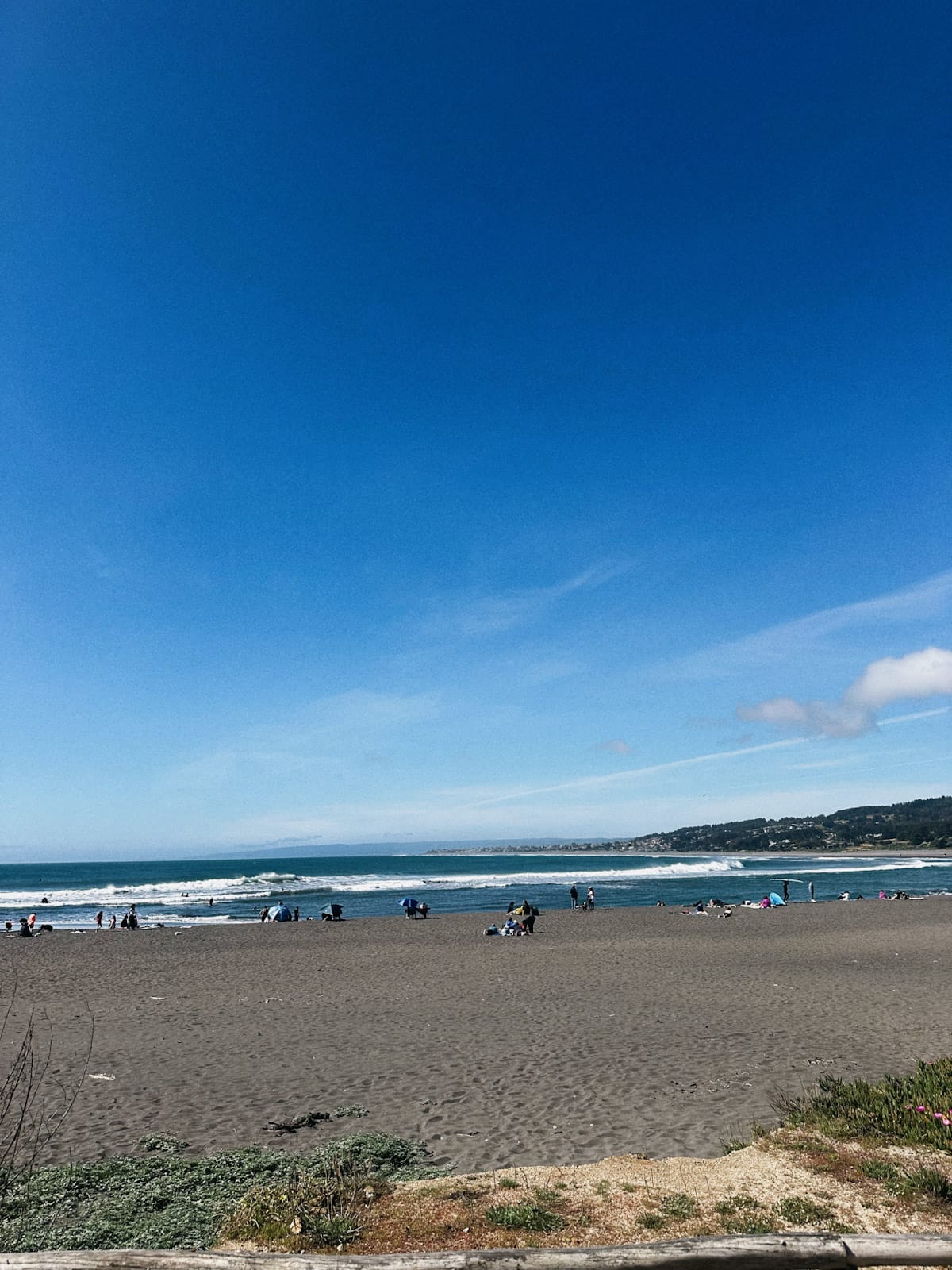
Chile’s surf capital, Pichilemu, blends laid-back beach life with rugged Pacific beauty. Known for its world-class waves and relaxed atmosphere, this coastal town attracts surfers, travelers, and locals alike looking for good food, good vibes, and long days by the ocean.
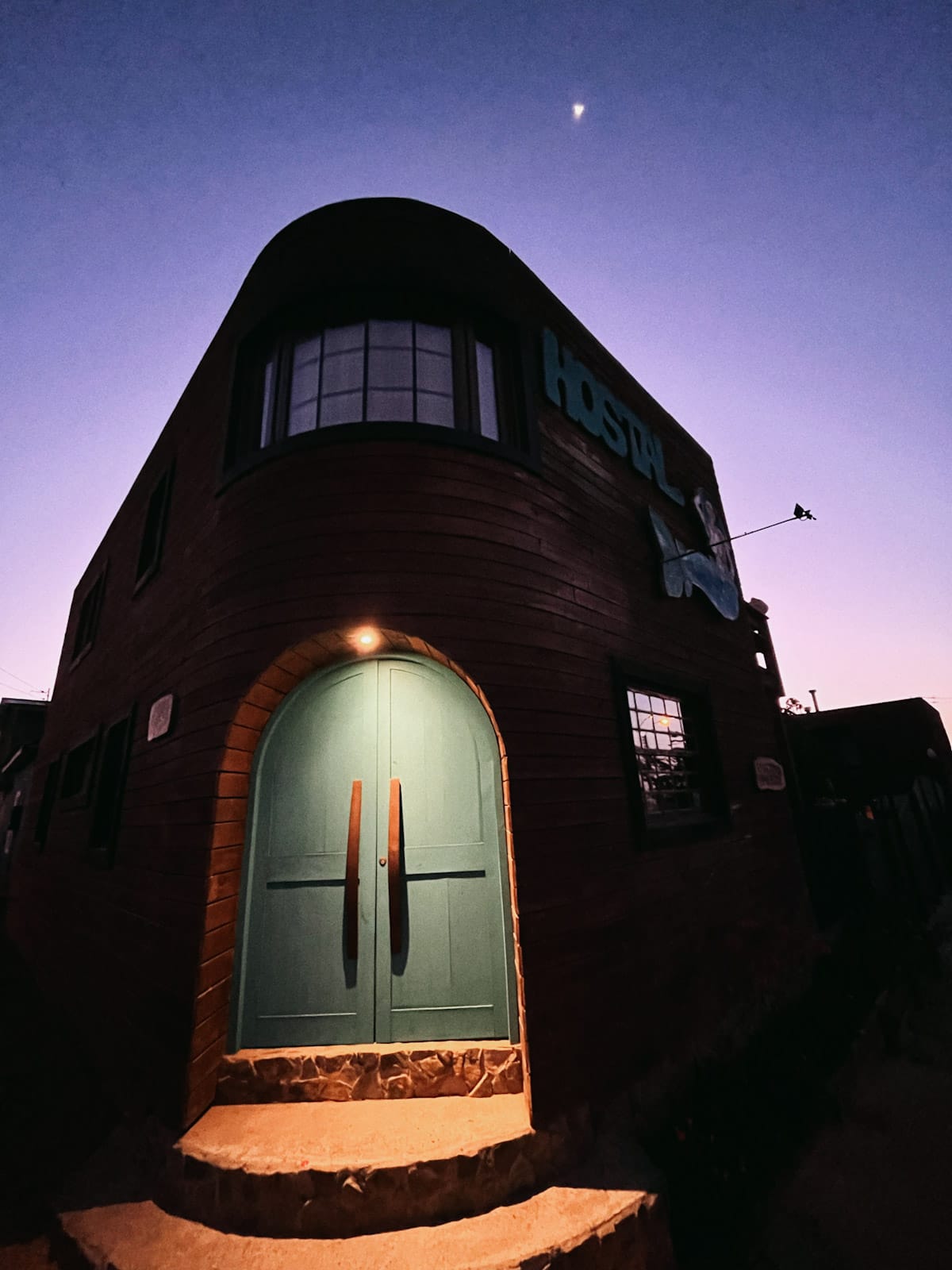
Stay at Hostal Sirena
A cozy and stylish stay just a short walk from the beach, Hostal Sirena is one of the best options in town. The rooms are bright and comfortable, the shared spaces are relaxed, and the garden is perfect for winding down after a surf session. It’s also close to cafés and surf shops, making it an ideal base for exploring Pichilemu.
Where to eat
Sushi Tsumare – An unexpected gem in this small surf town, Sushi Tsumare serves some of the best sushi on the Chilean coast. Fresh fish, creative rolls, and generous portions make it a must-visit after a long day in the water.
Sanguchería La Casa Verde – The go-to spot for post-surf hunger. Expect excellent fish sandwiches and cold craft beers. It’s casual, friendly, and always full of good energy.
La Teta Dulce Café – The perfect place to start the day or take a break in the afternoon. Great coffee, homemade cakes, and a relaxed surf-town vibe.
Where to surf
La Puntilla – The main surf spot in town and one of Chile’s most famous left-hand waves. It can get crowded, especially on weekends, and there’s sometimes a strong current—so it’s best suited for intermediate to advanced surfers.
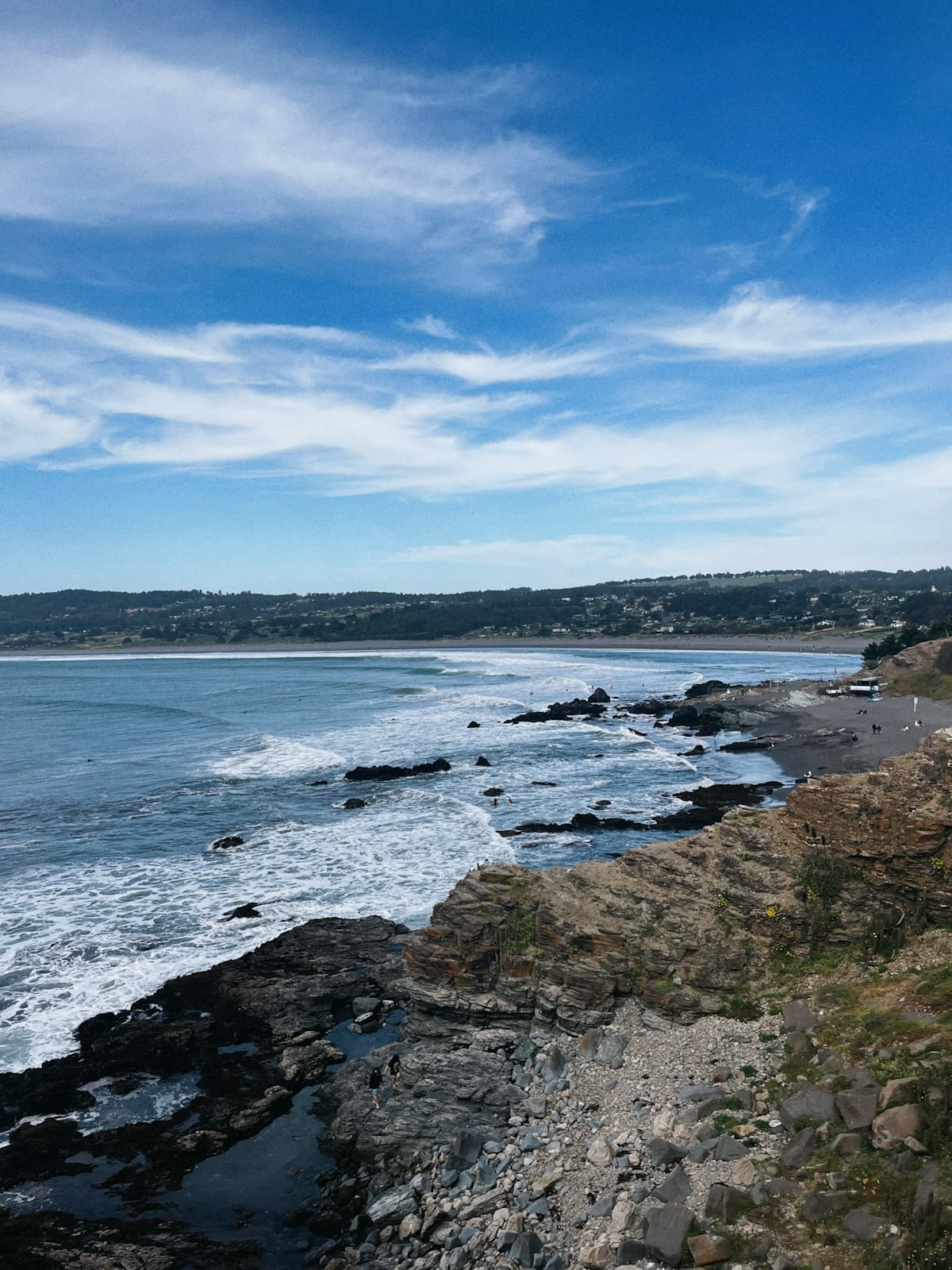
Punta de Lobos – About a 10-minute drive from town, this legendary break is a must for any surfer. With its dramatic cliffs and consistent waves, Punta de Lobos offers some of the best surf in South America and an incredible ocean view.
Surf gear
If you need to gear up, Tienda de Surf Backside is the best place to shop. They have a good (small) selection of wetsuits and second-hand surfboards, along with accessories and local surf advice.
Sea
Puertecillo: remote surf haven on Chile’s central coast
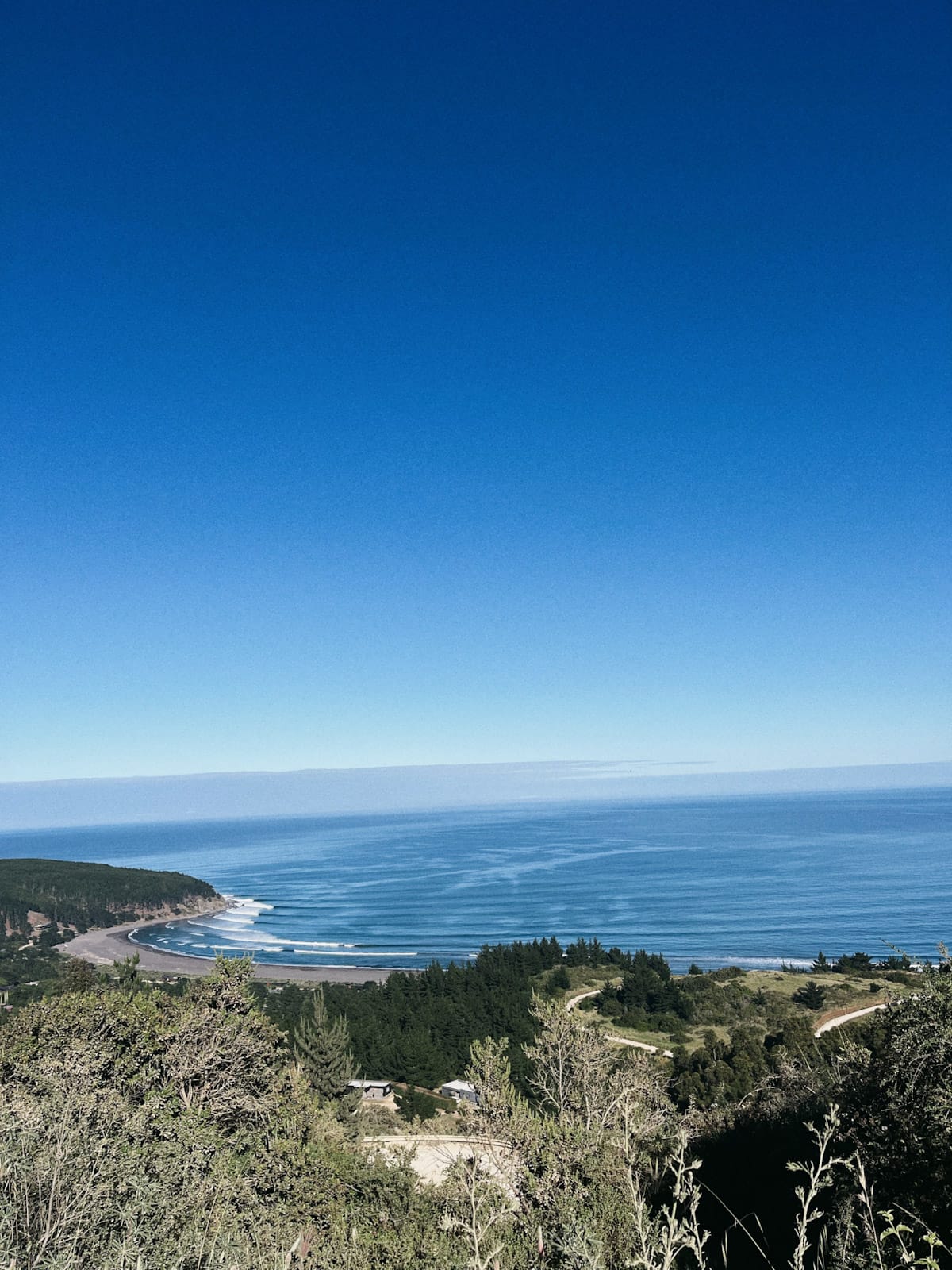
Tucked away along Chile’s rugged coastline, Puertecillo is a small, peaceful surf village surrounded by forested hills and dramatic cliffs. Known for its consistent waves and relaxed atmosphere, it’s a favorite escape for surfers and travelers seeking nature, tranquility and beautiful waves. The village feels far removed from the busy world—expect dirt roads, ocean views, and star-filled nights.
Stay at Glamping Puertecillo Surf & Camp
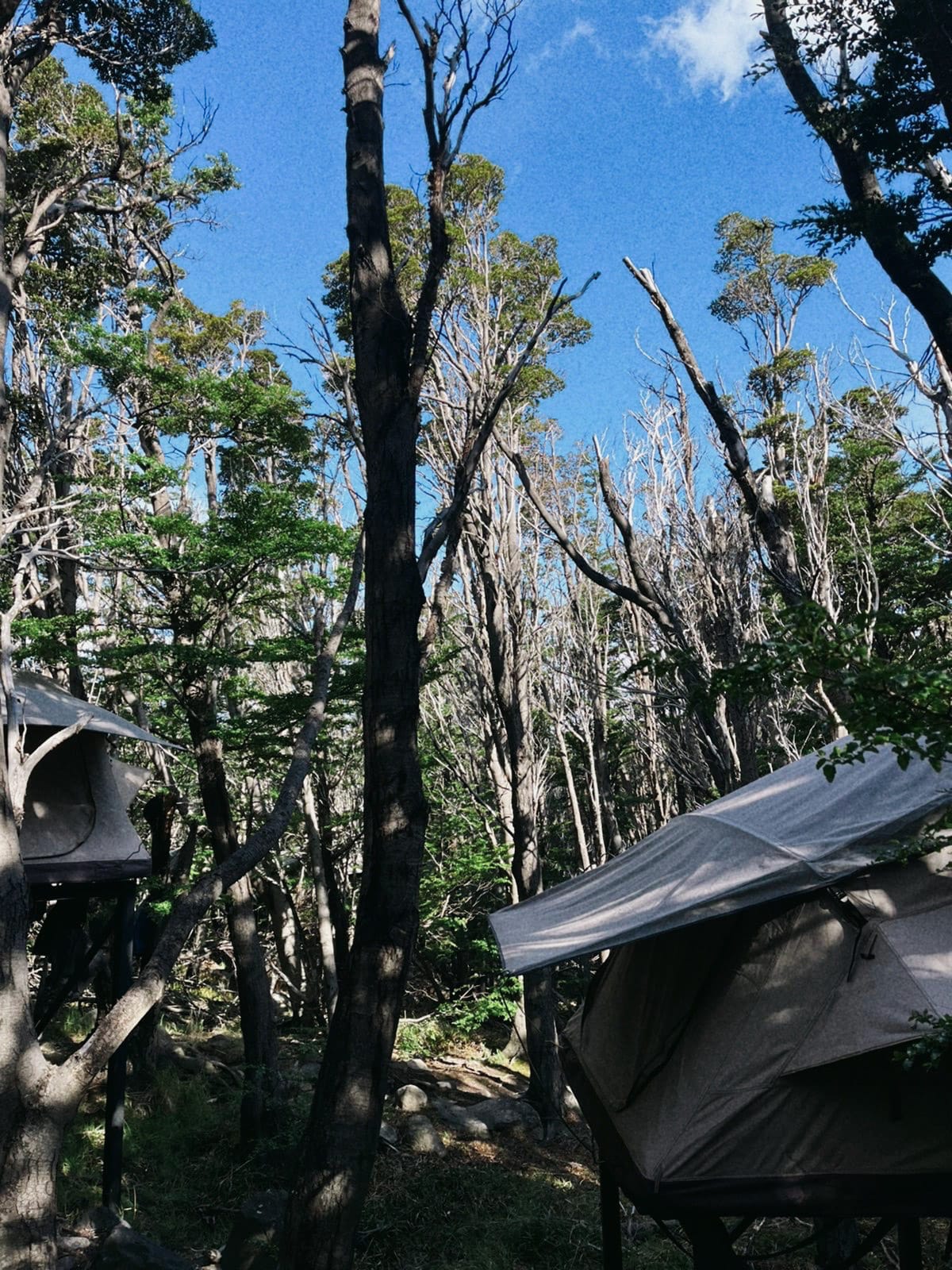
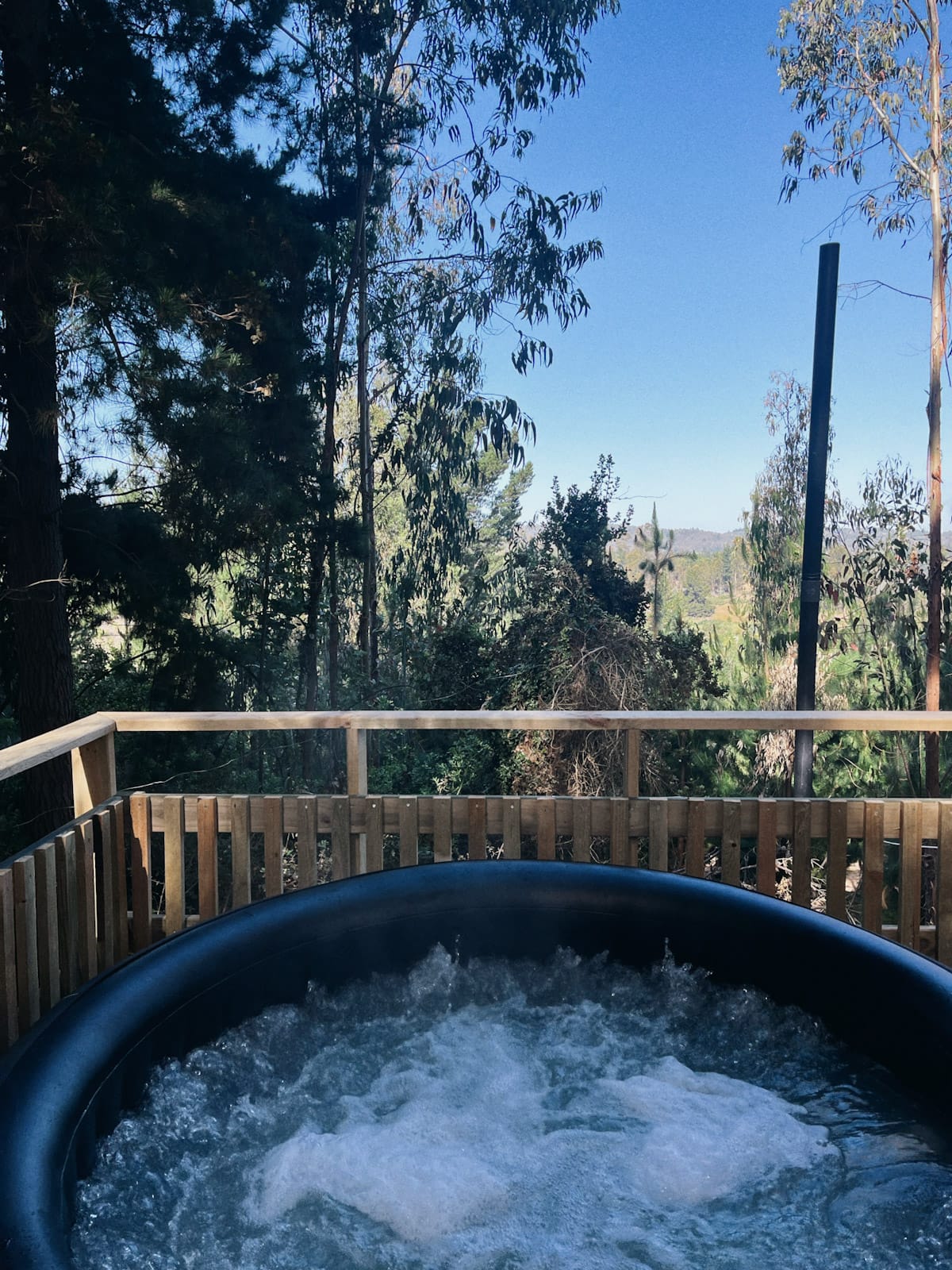
Glamping Puertecillo Surf & Camp is one of the best places to stay in the area. Set in a quiet forest filled with birds, it combines comfort with nature. The tents come with real beds, private bathrooms, and fully equipped kitchens, creating the perfect balance between camping and comfort. Some units even feature a jacuzzi for a relaxing soak after surfing. It’s peaceful, beautifully designed, and ideal for anyone who enjoys being close to nature without giving up modern amenities.
Where to eat
Cresta de la Ola – a great family-owned restaurant just a short drive away, known for its welcoming atmosphere and excellent home made food. They serve a mix of meat, fish, and vegan dishes, all made with fresh local ingredients.
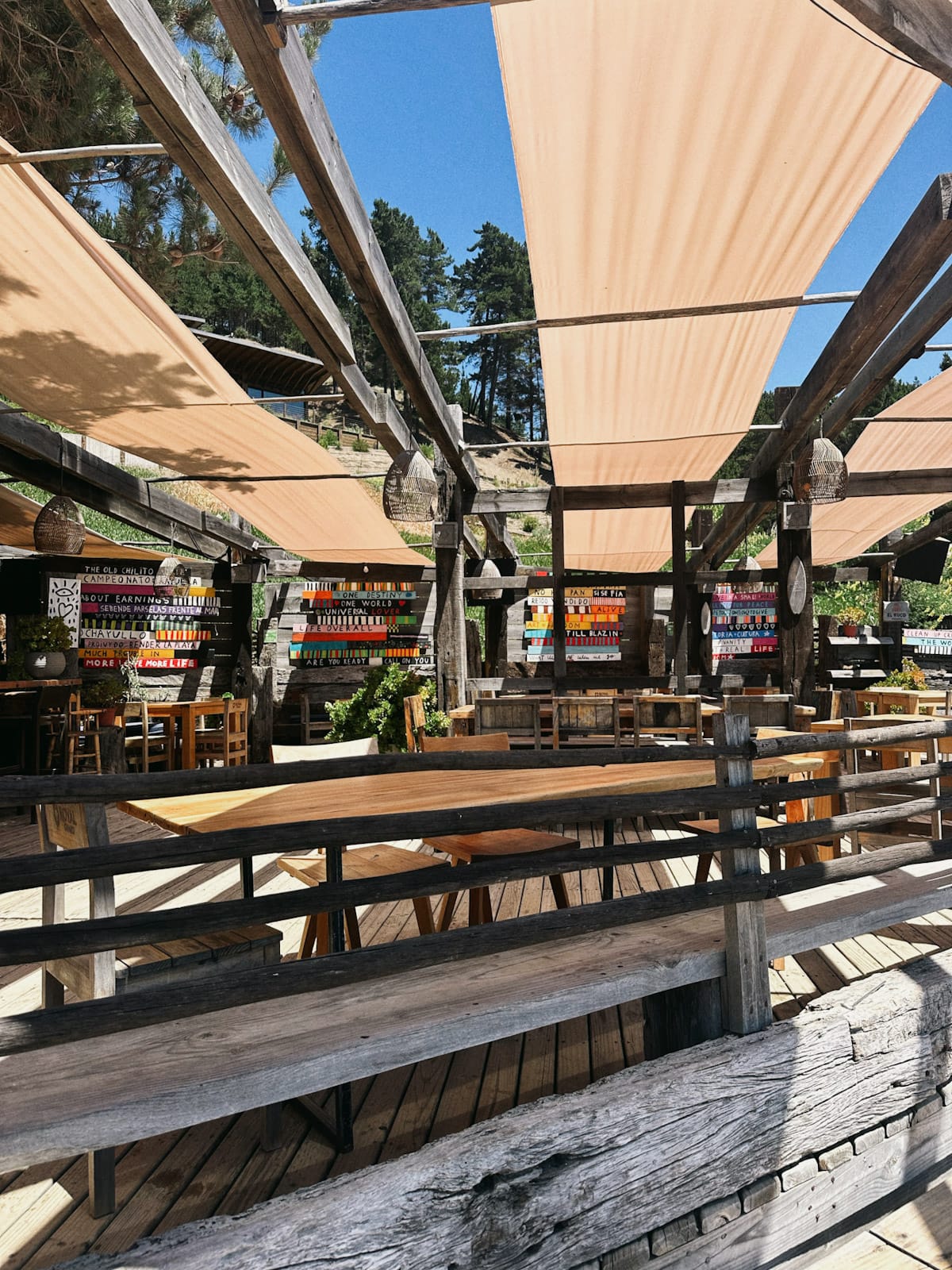
Taringuita – located next to the main surf spot and surf school, this relaxed restaurant is perfect for a post-surf meal or drink. The menu features casual Chilean dishes and a laid-back beach vibe.
El Pariente Restaurante Bar Puertecillo – a local favorite for empanadas. It’s a small, friendly spot that’s ideal for a quick snack between surf sessions.
Where to surf
Puertecillo’s long left-hand wave is one of the best-kept secrets on Chile’s coast. Next to Puertezion Surf School, it offers excellent conditions for both intermediate and advanced surfers.
High tide: waves are slower and smoother—great for longer rides and relaxed sessions.
Low tide: faster, more powerful waves with occasional barrels for those looking for a challenge.
For an easier paddle out, it’s possible to enter the water between the rocks—locals often use this route to avoid the strong currents.
Getting there
You’ll need a car to reach Puertecillo, as public transport options are limited and roads can be steep and unpaved. A 4×4 is generally recommended, especially after rain, but as of October 2025, it was possible to reach the beach with a regular rental car without any issues.
Nature
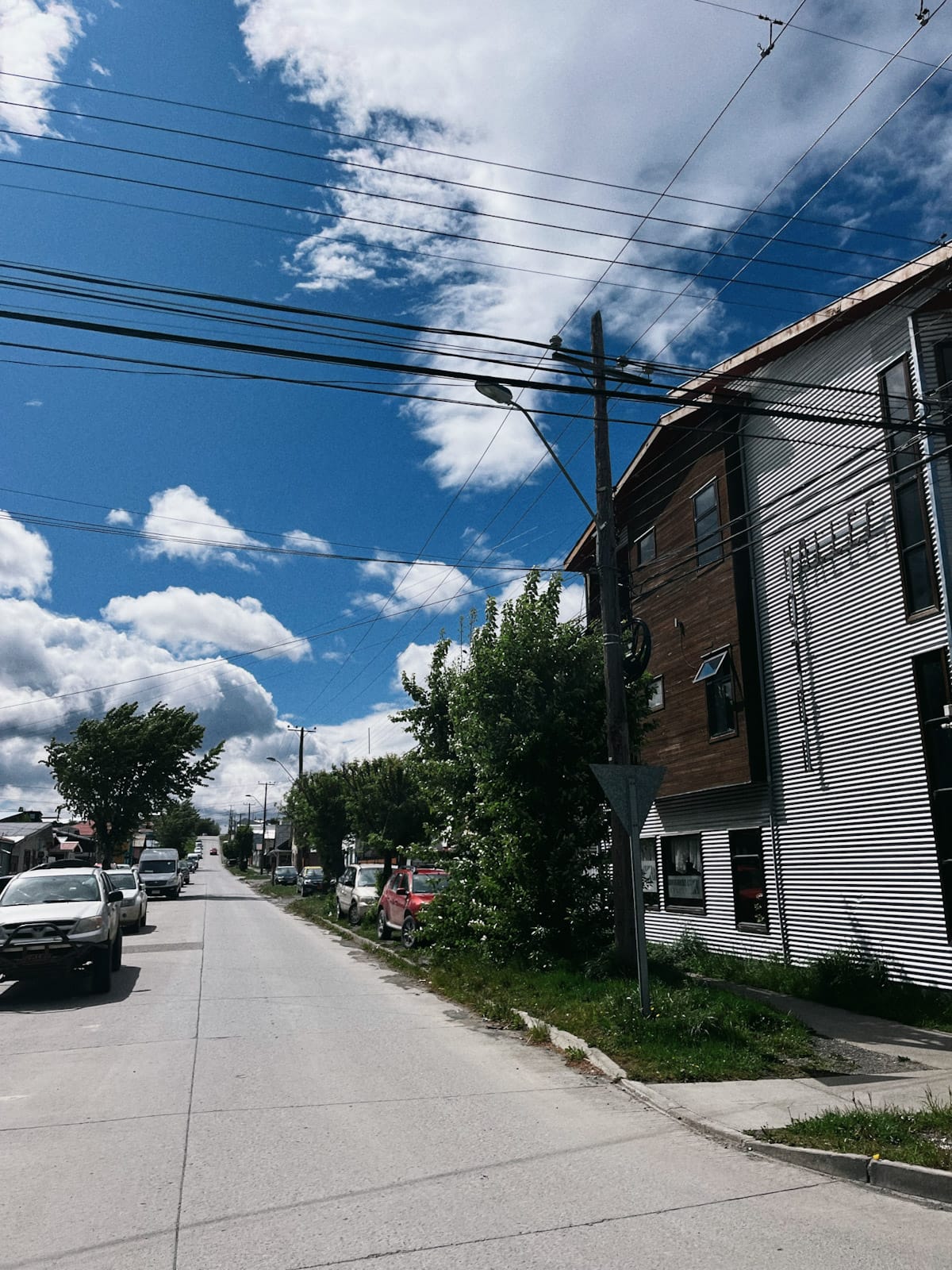
Puerto Natales: small Patagonian base with big adventure energy
Puerto Natales is the calm, wind-swept gateway to Torres del Paine, known for its mountain views, friendly locals, and a compact center filled with cafés, bakeries, and outdoor shops. It’s the perfect place to prepare for the W or O trek—or to decompress afterward with good food and a warm bed.
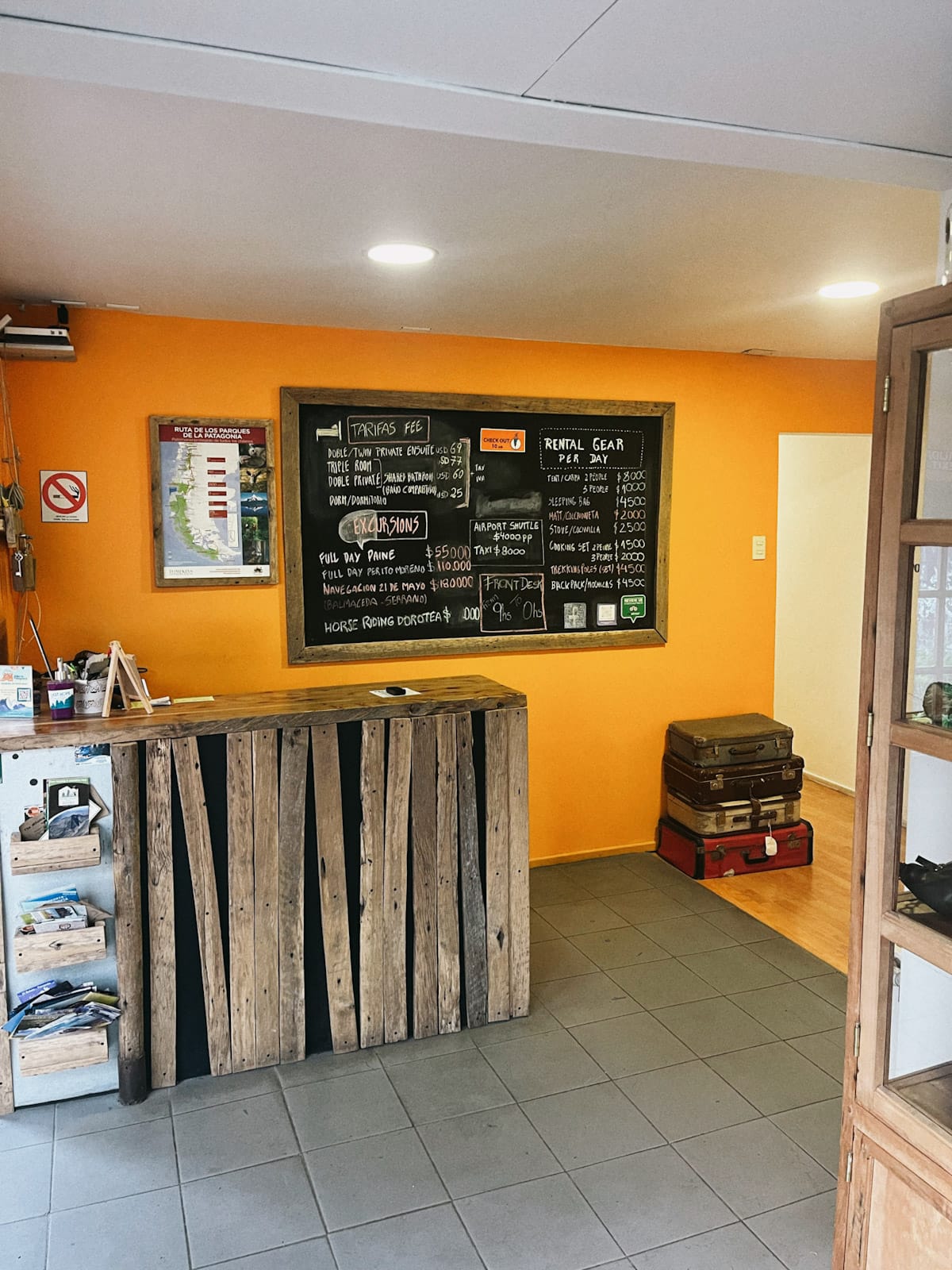
Stay at El Patagónico Hostel
Hostel El Patagónico is the best place to stay in Puerto Natales. The vibe is welcoming and social without being noisy, and the owners are known for their kindness and local advice. They rent out high-quality hiking gear (ideal if you’re gearing up for Torres del Paine) and offer private rooms with private bathrooms for travelers who prefer comfort. It’s cozy, practical, and perfectly set up for trekkers.
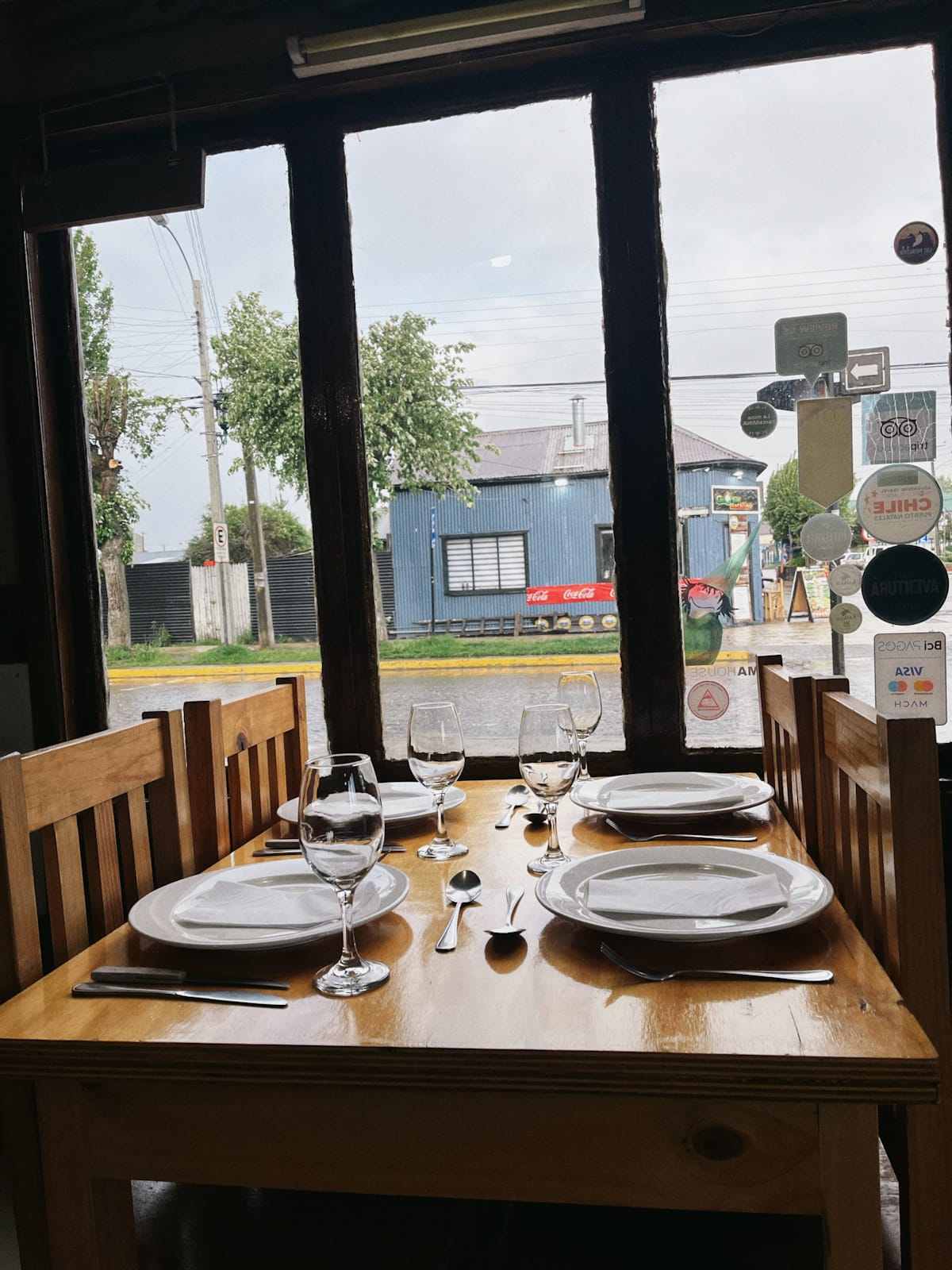
Where to eat
Alveoli Bakery – a amazing bakery with excellent pastries and surprisingly good pizza. Great for breakfast or carb-loading before a trek.
Café Kaiken – a classic family-run Chilean restaurant with generous portions, great fish dishes, and solid pasta options.
Menta Café – a lovely spot for vegan pastries and coffee.
El Tejano Tacos – the place to go for tacos in Puerto Natales—casual, tasty, and perfect after a long day of hiking or travel.
Groceries for the W or O Trek
Skip Unimarc and head to Supermercado Don Bosco. It has better options for trekking food (nuts, snacks, easy meals, dehydrated products) and is much quieter and more pleasant to shop in—especially in high season when everyone is preparing for the park.
City
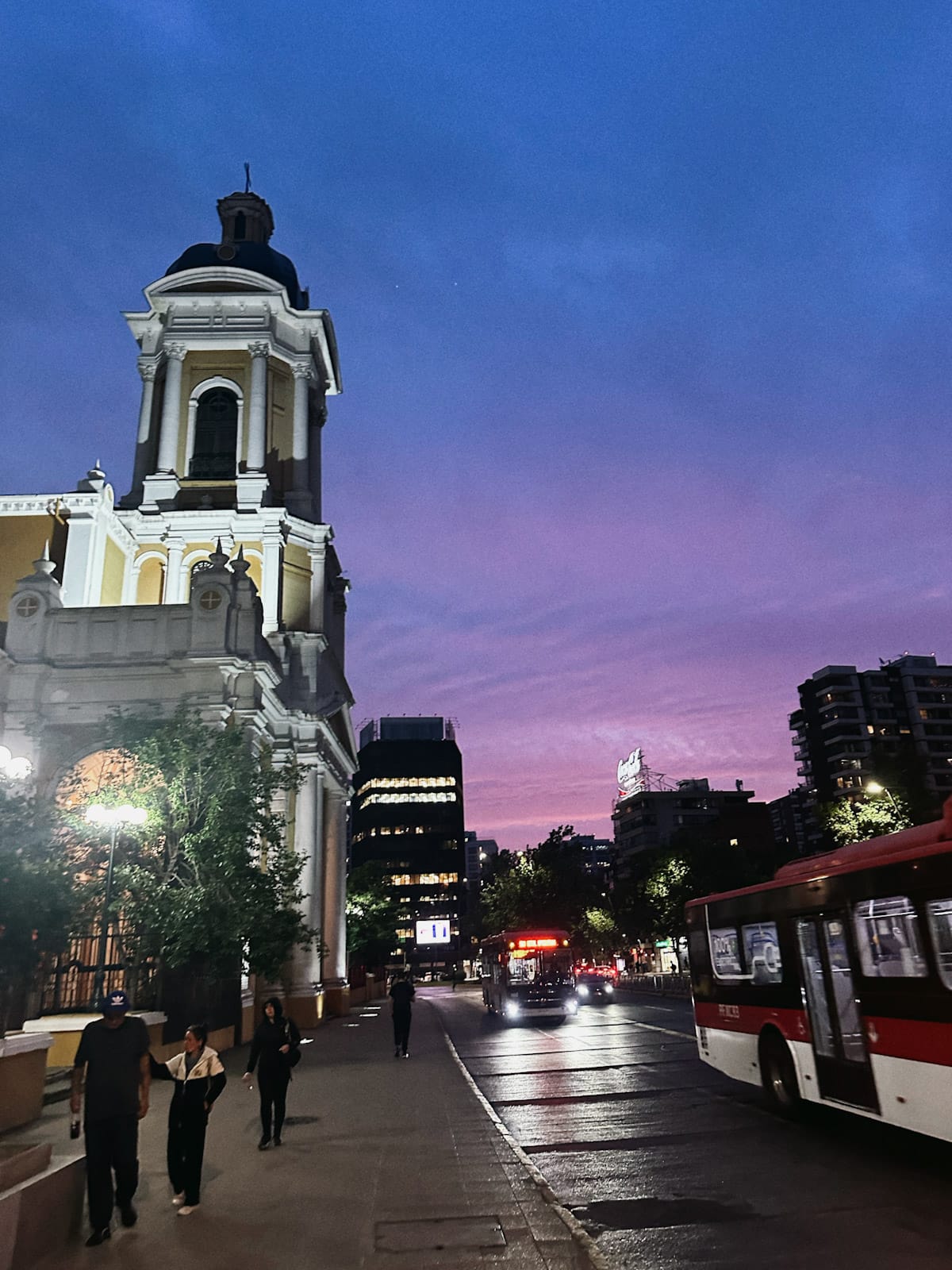
Santiago: culture, food & nightlife in Chile’s Capital
Santiago blends modern city life with mountain views, leafy neighbourhoods and a lively food and music scene. It’s a city that rewards exploration—drifting between cafés, discovering small bars, and ending the day with sunsets over the Andes.
Stay at Casa de Todos
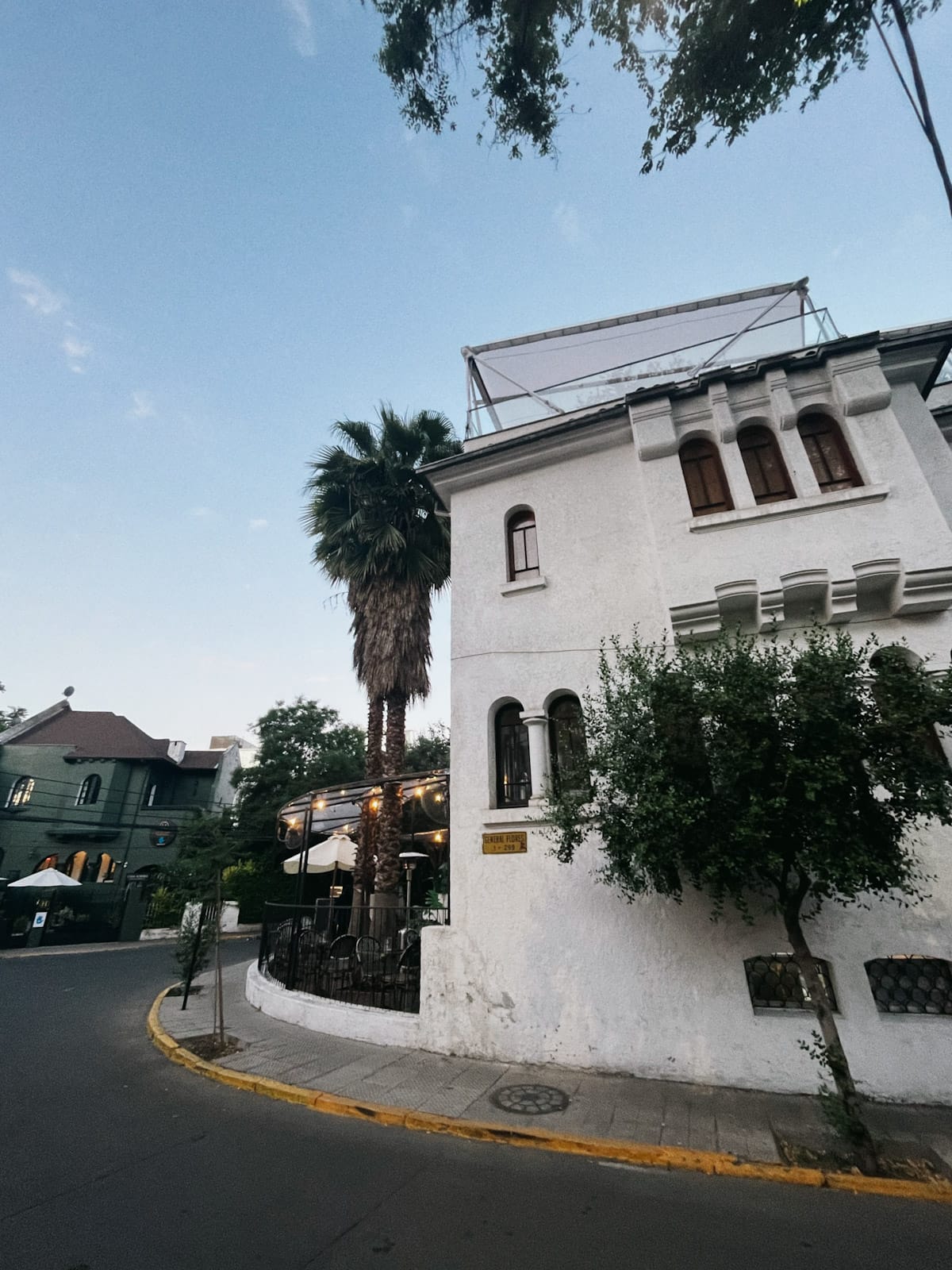
Casa de Todos is one of the best boutique hotels in Santiago, set in what is arguably the city’s most enjoyable and safe neighbourhood. The street is lined with friendly bars and even a cosy jazz club, giving the area a warm, local vibe without feeling busy.
The hotel itself is quiet and comfortable, with big beds, good breakfast, very kind staff, and free parking if needed. The location couldn’t be better for exploring the city, especially if you enjoy going out in the evenings without having to walk far.
Stay at Wyndham Hotel near Santiago Airport
For travelers catching an early flight, the Wyndham Hotel near Santiago Airport is a reliable and comfortable option. It’s close to the terminals (6 minutes), easy to reach (free transfer), and ideal for a short stay before or after travel days.
Where to eat
Holy Moly – One of the best burger places in Santiago. Generous portions, great flavours, and a good stop after a long day exploring.
Tío Tomate – A great place for pizza with a casual atmosphere and great terrace in Barrio Italia.
Koychi Korean Street Food – Excellent Korean food, ideal when you want something fast, flavourful and comforting.
Swagat 2.0 – A solid choice for Indian food. Not the coziest restaurant in Santiago, but the dishes are tasty and well-priced.
Saoco Vegan Bakery – Probably the best vegan bakery in South America. Expect creative pastries, great breads and surprising vegan lunch options.
Where to drink
Backroom Bar – A favourite for drinks and live jazz. The atmosphere is intimate, the cocktails are great, and the music makes it one of the standout bars in the area.
Guachita Culebra – A relaxed spot with a lovely terrace, perfect for warm evenings and long conversations over drinks.
Bar Rodrigo – Another option nearby with live music. It’s fun and lively, but Backroom Bar still takes the top spot for ambience and quality.
AC Hotel – See the best view of Santiago below.
What to do
Centro Cultural Gabriela Mistral (GAM) – One of the city’s top cultural spaces. Check their program for concerts, dance performances, exhibitions and festivals—there’s always something happening.
Estadio Nacional – Chile’s major venue for big concerts. By the end of 2025, artists like Dua Lipa, Oasis and Shakira all performed here. If you’re visiting during a major tour, this is the place to experience it.
Costanera Center – One of the largest shopping malls in South America and the best place in Santiago to stock up on essentials. You’ll find everything from clothing to electronics, plus a full Decathlon for outdoor gear and surf accessories.
For surf-specific shopping, visit Surfers Paradise surf shop and Surfhouse—two excellent surf shops with a good range of equipment, including second-hand boards. Both are reliable stops before heading to the coast.
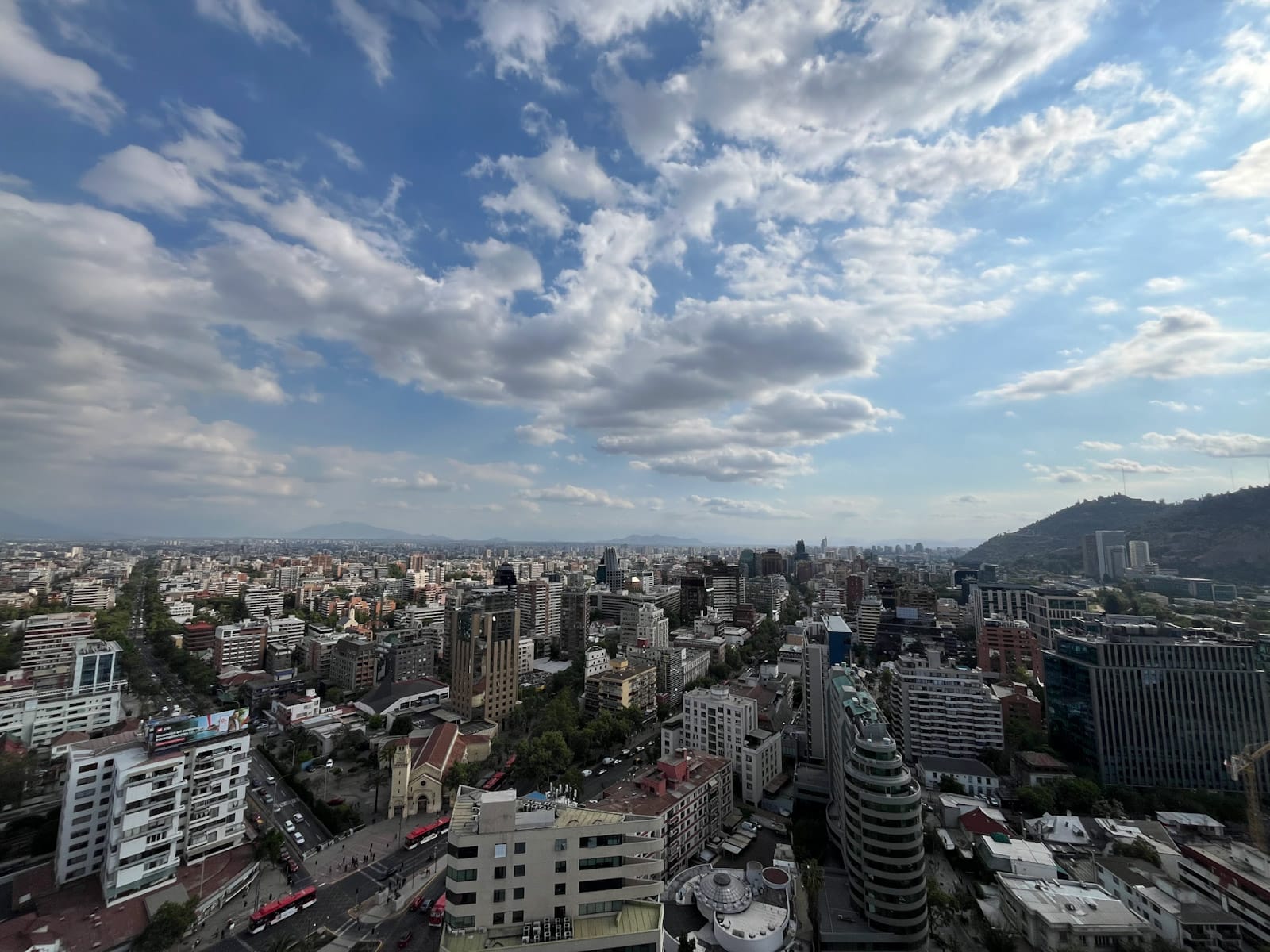
The best view of Santiago
Skip the ticket lines and high prices at Sky Costanera. Instead, go to the terrace of the AC Hotel in the Costanera Center. The view is just as impressive—panoramic cityscape with the Andes behind it—and it’s completely free. Drinks are available and the prices are surprisingly reasonable, making it a great spot for sunset.
Nature
The W Trek: Patagonia’s classic adventure
The W Trek in Torres del Paine is one of Patagonia’s most famous hikes—but also one of its busiest. If spending five days surrounded by other travellers doesn’t appeal to you, it may be better to do only a day trip. But for those who want the full experience, the W remains a rewarding route with glaciers, lakes, forests, and one of the most iconic viewpoints in South America.
The best way to walk the W Trek is from west to east. This allows you to finish at the Torres Towers on the final morning—easily the most beautiful and hardest day—and you’ll have the wind at your back for most of the trek. It’s the same direction used for the O Circuit.
You do not need a guide for the W Trek if you have basic hiking experience, carry a map, check the weather regularly, and avoid walking during bad weather (especially snowstorms). The refugios use Windguru for their forecasts, and Maps.me works well as a navigation app.
Getting to the start of the trek
From Puerto Natales, take a bus with Bus del Sur (around 15 USD in November 2025). Buses leave between 7:00 and 7:15 from the bus station, and any of them will arrive in time for the 10:30 catamaran (book a ticket to Pudeto).
Tip: Buy the catamaran ticket online—cash is no longer accepted (27 USD, November 2025).
The bus stops at the park entrance to check or buy park tickets (around 50 USD for more than 3 days). Then you continue to Pudeto to board the catamaran.
Day 1: Paine Grande → Grey (3.5 hours)
After getting off the catamaran at Paine Grande around 11:30, the first day is a pleasant three-and-a-half-hour walk to Grey Camp. If you aim to finish the W in four days, you’ll need to walk back to Paine Grande the same afternoon—but after 15:00 it’s not recommended to walk back ( November, 2025) due to wind and weather. A better option is to stay for the night in this area so you have time to visit the Grey Glacier mirador.
Refugio Grey and Paine Grande are bookable via Vértice (book here). Both campsites are windy, so if you have the budget, consider booking a dorm room. Breakfast and dinner are buffet style; lunch is usually a sandwich and a few energy bars.
To save money, bring your own food from Puerto Natales (bread, noodles, instant meals). Restaurants sometimes sell pizzas or burgers for around 18 USD—much cheaper than a full refugio dinner (55 USD). Beer is around 7 USD for 470 ml. The breakfast is good, with eggs, bread, cereals, and more.
Day 2: Grey → Paine Grande (3.5 hours)
This is a short day back to Paine Grande. If you prefer to shorten the trek to four days overall, you can walk further to Francés instead. Otherwise, enjoy the morning at Grey before heading down.
Tip: Stay in a dorm at Paine Grande—it’s very windy outside and the refugio has a cozy fireplace upstairs (only for guests sleeping inside).
Day 3: Paine Grande → Italiano → Francés / Cuernos
Walk three hours to Italiano, where you can leave your backpack and hike up to Mirador Francés (1.5 hours up) or Mirador Británico (3 hours up), if open. If staying at Francés, time is on your side—you can explore at a comfortable pace.
If you’re heading to Cuernos (which is preferred because it is the most beautiful camping on the trek), be cautious about energy levels: the hike from Italiano to Cuernos takes about 2.5 hours, and Británico might be too much on the same day. The stretch from Italiano to Cuernos is especially scenic.
Cuernos and Chileno (as well as Central) are bookable through Las Torres (book here). The tented platforms are beautiful but expensive. Again, bringing your own lunch and dinner can save a lot of money.
Day 4: Cuernos → Chileno (or Central)
From Cuernos it’s a 4–5 hour hike to Chileno. If you still have energy and the weather looks good, you can push directly to the Torres viewpoint the same afternoon (add 3 hours round-trip). Otherwise, save the climb for the next morning.
If Chileno is fully booked, Central is a good backup.
Day 5: Torres del Paine → Finish
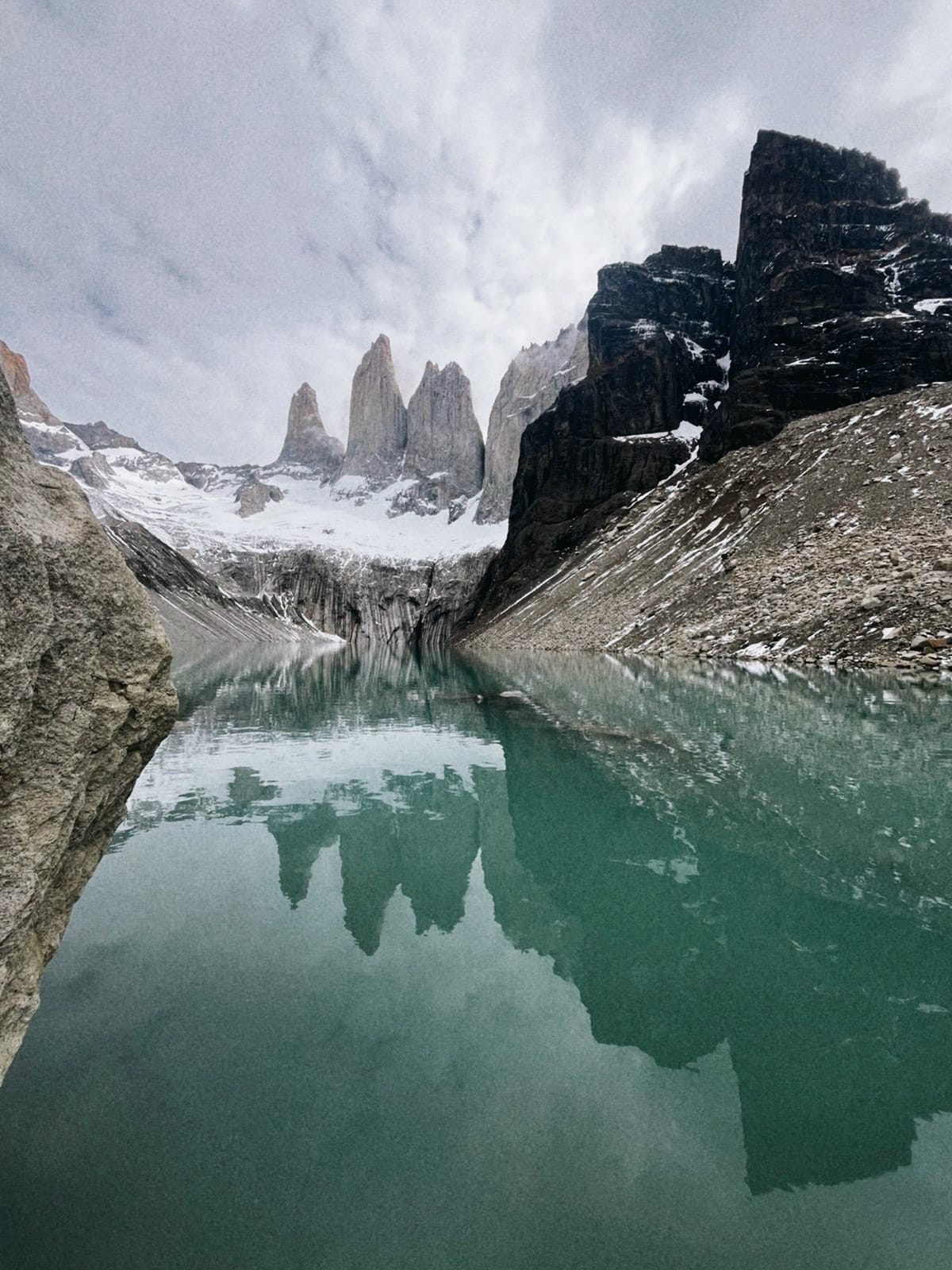
Start early—aim to reach the Torres viewpoint around 6:30, when the rising sun hits the granite towers. It’s one of Patagonia’s most unforgettable views. Leave your big bag at Central or Chileno before the climb so you can hike up with only the essentials.
Afterwards, head back down to Central to catch the transport back to Puerto Natales. Tip: the small shuttle bus to the park entrance doesn’t run all day, so make sure its schedule connects well with the larger bus returning to Puerto Natales.
General tips for the W Trek
Hot water is free everywhere (November 2025) —bring a large thermos for noodles, tea or coffee.
Instant coffee is the easiest and most affordable way to have (free) coffee anywhere.
Bring a liner and/or sleeping bag; the refugio sleeping bags are not washed daily.
Always check the weather—never walk during bad weather.
Windguru = best forecast in the park.
Maps.me = reliable navigation.
The wind is strong—eastward hiking keeps it mostly at your back.